


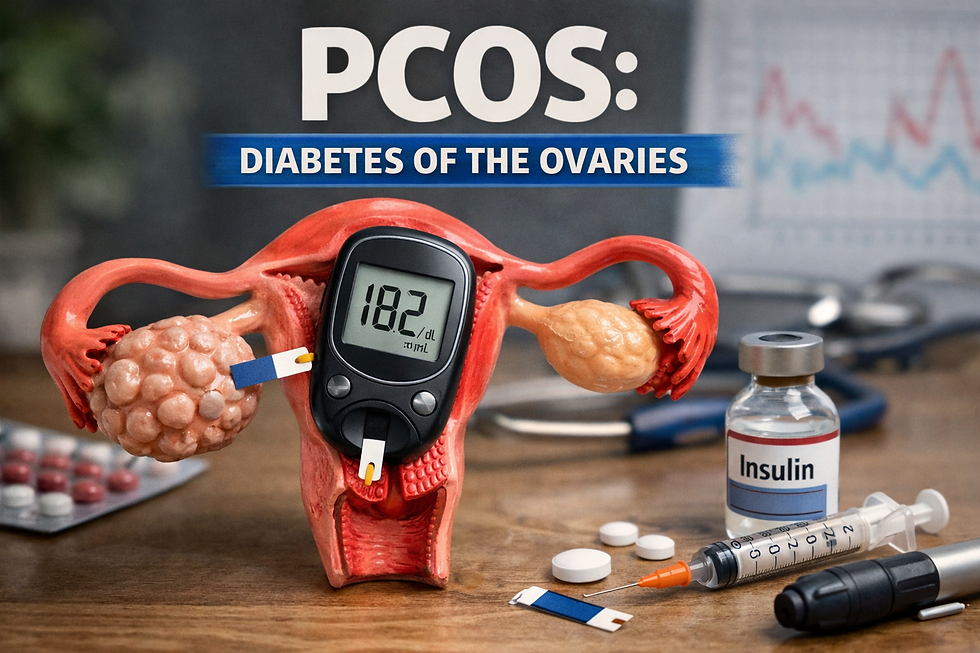
PCOS: The "Diabetes of the Ovaries" — And Why That Changes Everything…
What if the root of your PCOS isn't really about your ovaries at all?
For decades, Polycystic Ovary Syndrome has been treated as a reproductive problem — irregular periods, cysts on the ovaries, difficulty conceiving. But here's what most women are never told:
PCOS is increasingly recognized as a metabolic disorder — so much so that many experts now call it "diabetes of the ovaries."
And that reframe? It changes everything about how we should be treating it.
What Does "Diabetes of the Ovaries" Actually Mean?
At its core, PCOS is driven by insulin resistance — the same metabolic dysfunction that underlies Type 2 diabetes. When your cells stop responding efficiently to insulin, your body compensates by producing more insulin. And here's where your ovaries come in:
Those chronically elevated insulin levels directly stimulate the ovaries to overproduce androgens — hormones like testosterone and DHEA-S. This is what drives so many of the symptoms women struggle with: acne, hair loss, unwanted facial hair, irregular or absent periods, weight that won't budge, and difficulty ovulating.
The ovaries aren't malfunctioning. They're responding to a metabolic signal.
Think of it this way — if diabetes is what happens when insulin resistance affects your blood sugar regulation, PCOS is what happens when that same insulin resistance targets your ovaries.
Why This Matters for Treatment
When PCOS is treated as only a hormonal or reproductive issue, the typical approach looks like this: birth control pills to "regulate" your cycle, spironolactone for acne and hair growth, maybe metformin as an afterthought. These may manage symptoms on the surface, but they don't address the metabolic fire driving the condition.
A root-cause approach asks different questions:
What is driving your insulin resistance? Poor blood sugar regulation, chronic inflammation, gut dysfunction, environmental toxins, nutrient deficiencies, chronic stress — these all play a role.
What does your metabolic health actually look like? Not just fasting glucose, but fasting insulin, HbA1c, HOMA-IR, lipid panels, inflammatory markers — the full picture.
What's happening upstream? Cortisol dysregulation, thyroid dysfunction, and gut health all influence how your body handles insulin and hormones.
The Signs Your PCOS Has a Metabolic Root
You don't have to be overweight to have insulin-driven PCOS. Even lean women can have significant insulin resistance. Some signs to watch for:
Intense sugar or carb cravings
Energy crashes after meals
Weight that clusters around the midsection
Skin tags or darkened skin patches (acanthosis nigricans)
Feeling "hangry," shaky, or anxious between meals
Difficulty losing weight despite real effort
Brain fog and afternoon fatigue
A fasting insulin above 8–10 μIU/mL (even if your glucose looks "normal")
That last point is critical. Standard labs often miss insulin resistance entirely because they check fasting glucose alone. Your glucose can look perfectly normal while your insulin is working overtime behind the scenes. By the time glucose rises, you may have been insulin resistant for years.
A Functional Medicine Approach to PCOS
When we understand PCOS as a metabolic condition, the treatment strategy shifts dramatically:
Blood sugar and insulin optimization — through targeted nutrition, meal timing, and strategic movement — becomes the foundation, not an afterthought.
Comprehensive lab work — including fasting insulin, HOMA-IR, inflammatory markers, a full thyroid panel, adrenal function, and nutrient levels — gives us the complete picture of what's driving your symptoms.
Gut health matters more than you'd think — dysbiosis and intestinal permeability directly influence inflammation, estrogen metabolism, and insulin signaling. An imbalanced microbiome can perpetuate the cycle of PCOS.
Stress and cortisol regulation — chronic stress raises cortisol, which raises blood sugar, which raises insulin, which stimulates androgen production. The PCOS cycle and the stress cycle feed each other.
Targeted nutrient support — key nutrients like inositol, magnesium, chromium, vitamin D, and omega-3s have strong evidence for improving insulin sensitivity and supporting ovarian function.

The Bottom Line
PCOS is not just a reproductive inconvenience. It's a systemic metabolic condition with real long-term health implications — including increased risk for Type 2 diabetes, cardiovascular disease, fatty liver, and certain cancers.
But here's the empowering truth: because it's metabolic, it's modifiable. When you address the root cause — when you treat the insulin resistance, calm the inflammation, support the gut, and balance the stress response — the downstream symptoms often begin to resolve on their own.
Your ovaries were never broken. They were responding to a body in metabolic distress. Address the distress, and you give your body the chance to heal. This article is for educational purposes only. Please consult with your health care provider.
If you've been told "it's just PCOS" or handed a prescription without ever being asked about your metabolic health, your nutrition, your stress, or your gut — you deserve better. At Clark Wellness, we dig deeper because you deserve answers, not band-aids.
Ready to get to the root of your PCOS? https://www.clarkwellnesstx.com/book-online


Comments